The Oral History Project Plan
Plan a family or community oral history as a whole project: sittings sized to each narrator, every recording inside a two-hour visit, a question list at your own measured pace, consent and the release as two papers, two copies of every file, an index before any transcript, and a narrator who reads it first
TaleKeeper's Oral-History Interview Planner splits one sitting's recorded minutes across five sections and suggests a question count. A real oral history is more than one sitting: several sittings for several people, each inside a visit that runs longer than the recording, and every recorded hour still needing files, copies, an index or a transcript, and a reader after the recorder stops. This plan carries the planner through the whole project. In its worked example, three narrators and 330 recorded minutes become 6 sittings and 12 hours in the room; a 75-minute sitting gets 15 questions at the planner's default pace but 9 at the 6.5 minutes a timed practice interview actually ran; and indexing every hour first, then transcribing one narrator in full, takes 31 hours of work instead of 44. Sources are quoted where they are used: the Oral History Association's best practices, the UCSC Regional History Project's two-hour visit, and Oregon State University Libraries' eight-hours-per-hour rule of thumb. Every figure is computed by the site's own code, and the worked numbers are examples to replace with yours. It is not legal advice: consent and the release are separate papers, and you use your repository's own forms. Included: seven steps, four printable working pages (project sheet, sitting plan, consent and release log, time-tag index sheet), reference tables, a quickstart, and a personalised sheet worked from the numbers you enter in the planner.
What’s inside
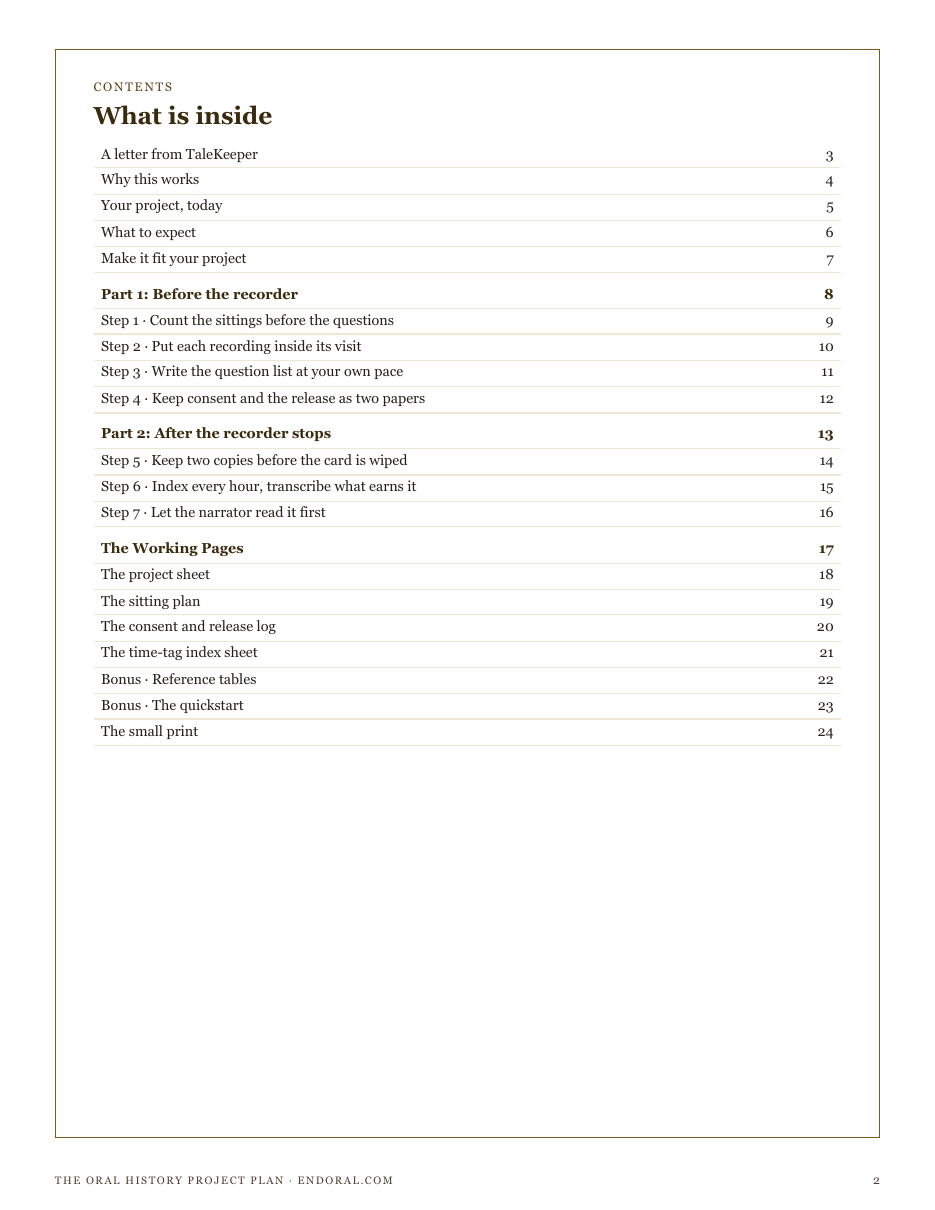
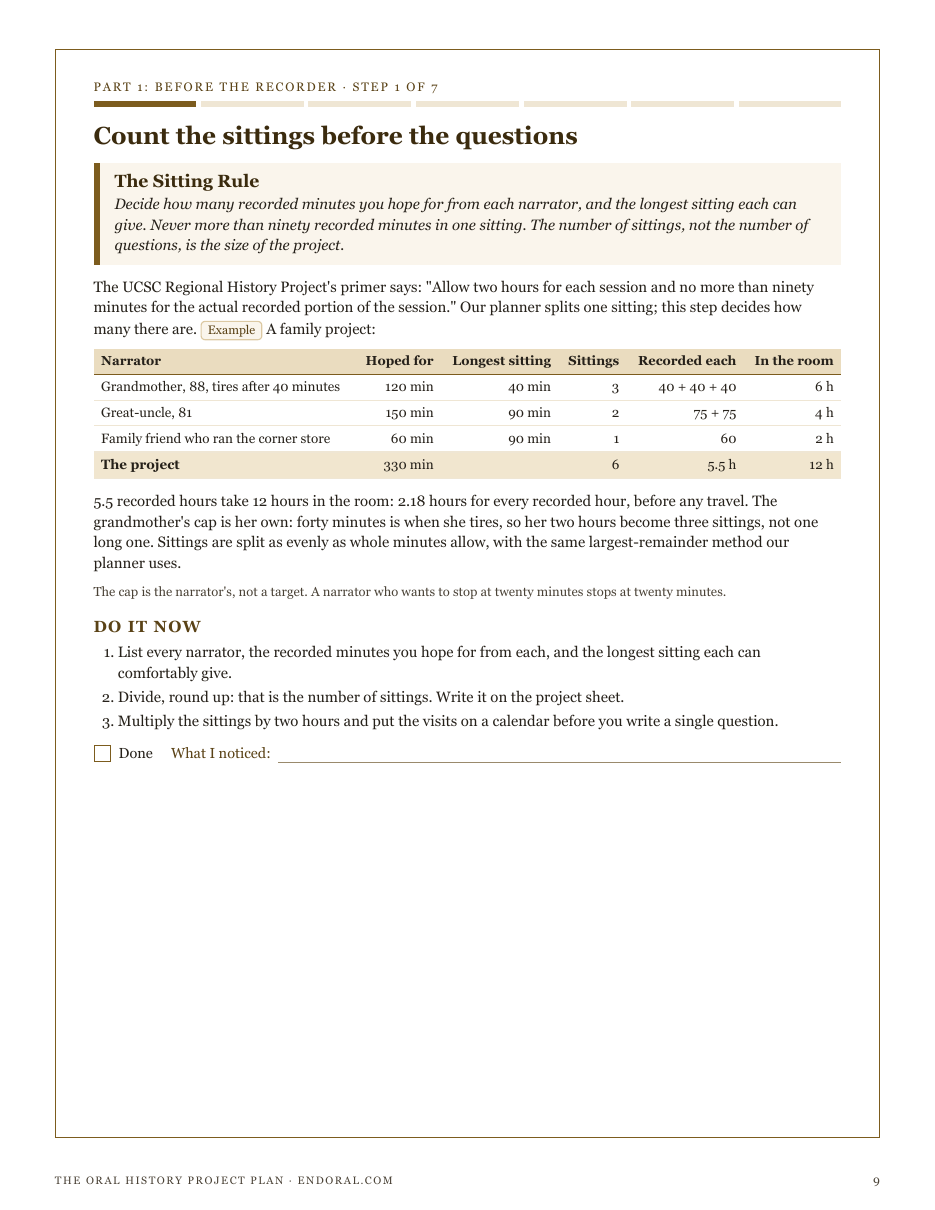
- The Sitting Rule: sittings sized to what each narrator can give, never over ninety recorded minutes
- The Two-Hour Visit Rule: the recording placed inside its visit, with the spoken lead-in written out
- The Measured Pace Rule: one timed practice interview, and the question list written at that pace
- The Two Papers Rule: informed consent and the release kept apart, restrictions and pseudonyms logged
- The Two Copies Rule: file sizes by format, and two checked copies before the card is reused
- The Index First Rule: five-minute time tags for every hour, full transcripts only where they earn it
- The First Reader Rule: the narrator reads the index or transcript first, then deposit with its paper
- Four printable working pages: project sheet, sitting plan, consent and release log, time-tag index sheet
- Reference tables: the planner by recorded length and pace, file sizes per recorded hour, and the work one hour carries
- A quickstart checklist and a personalised sheet worked from your own planner inputs
Run one of the free calculators first and buy from that page, and this sheet is computed from your own figures. Buy from here and the pack still arrives complete — the sheet simply has no numbers of yours to work from yet.
14-day refund, no questions asked. If the pack is not what you needed, email support@graburl.com and we refund you in full — you do not have to justify it or delete the file. Full policy.
$15.00 including any taxes · PDF, 24 pages · instant download, link valid 7 days and 5 downloads.
Sold by GrabURL. The charge appears on your statement as GrabURL.
Refund policy · Terms of sale · support@graburl.com