The Handmade Card Batch Planner
The envelope chosen first and the card sized to it, a shape and weight the post takes at the stamp price, blanks cut with the grain, households counted with spares, spoilage and whole packs, programs in fours, and the sessions to finish in time
PaperFrost's free paper tools each answer one question, and a batch of handmade cards or invitations asks them all at once, plus a few none of them asks. The Card & Envelope Size Calculator sizes an envelope for one card but says nothing about the post: a square envelope or a wax seal pays a surcharge on every piece, and an extra layer can tip a piece into the next ounce. The Paper Quantity Calculator fits the most pieces either way round, and a folded blank cut the wrong way round folds across the grain and cracks. The planner puts the tools in order for one batch. In the worked example, sixty 5 x 7 in invitations: an A7 envelope leaves 1/4 in each way, enough for a flat card, while a layered card wants 4 3/4 x 6 3/4 in. The sealed piece with a reply card weighs 26.79 g, 1.56 g under an ounce, and a belly band tips it over. The calculator's answer, one blank a Letter sheet, folds across a long grain; 11 x 17 in gives two that fold cleanly, and the whole batch, reply cards included, is 46 sheets in two packs. A 10 page program prints as 12 on 3 sheets. Every figure is computed by the site's own tools from examples you replace with yours. Postage prices and mail rules are quoted with the carrier (USPS, Royal Mail) and the date we read them, because they change; clearances, spares and spoilage are called rules of thumb. Cutting safety for craft knives and guillotine cutters is included. You get a 23 page printable PDF with 7 steps, a mail check sheet, a cut plan, a session tracker, an envelope reference table and a quickstart, plus a personalised sheet worked from the numbers you entered in the calculator you came from.
What’s inside
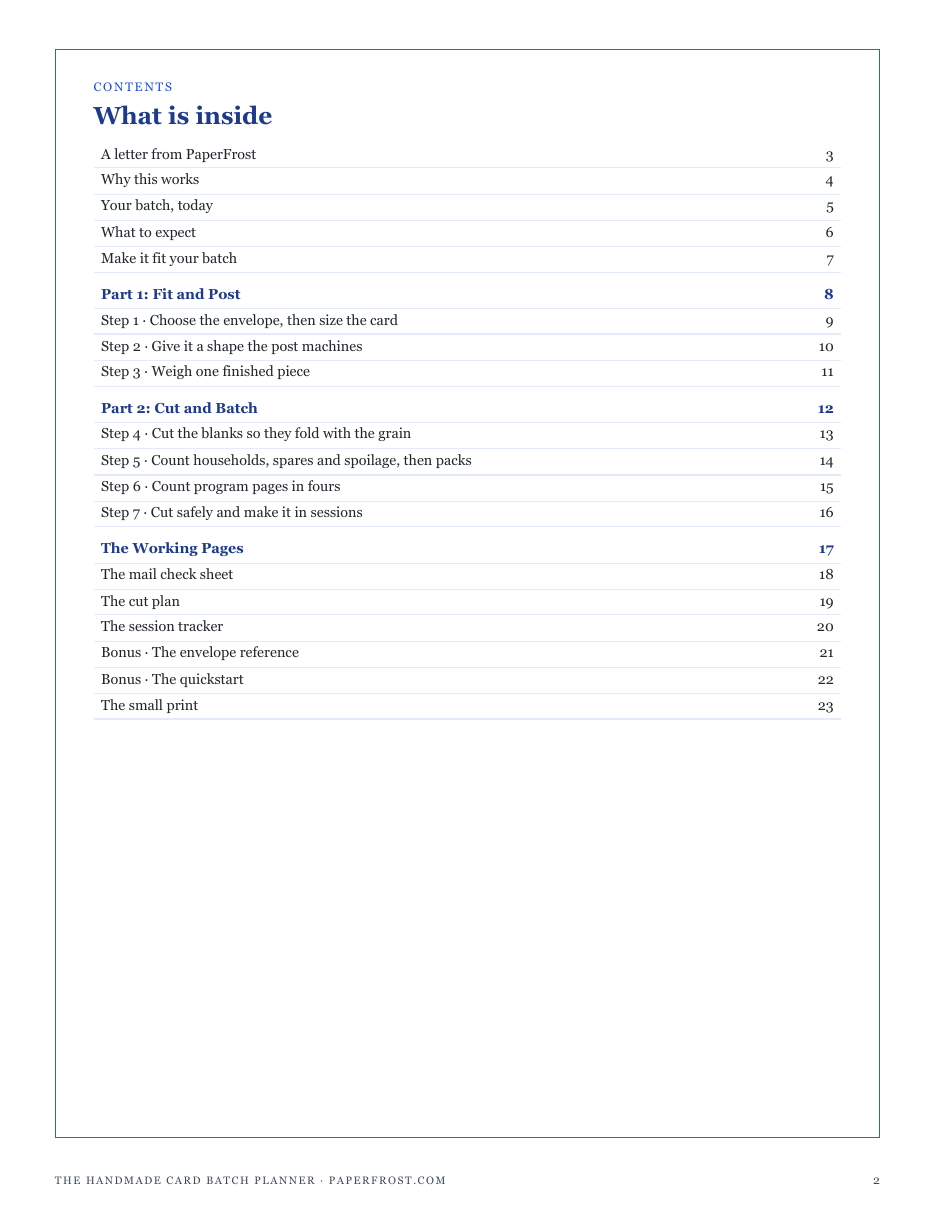
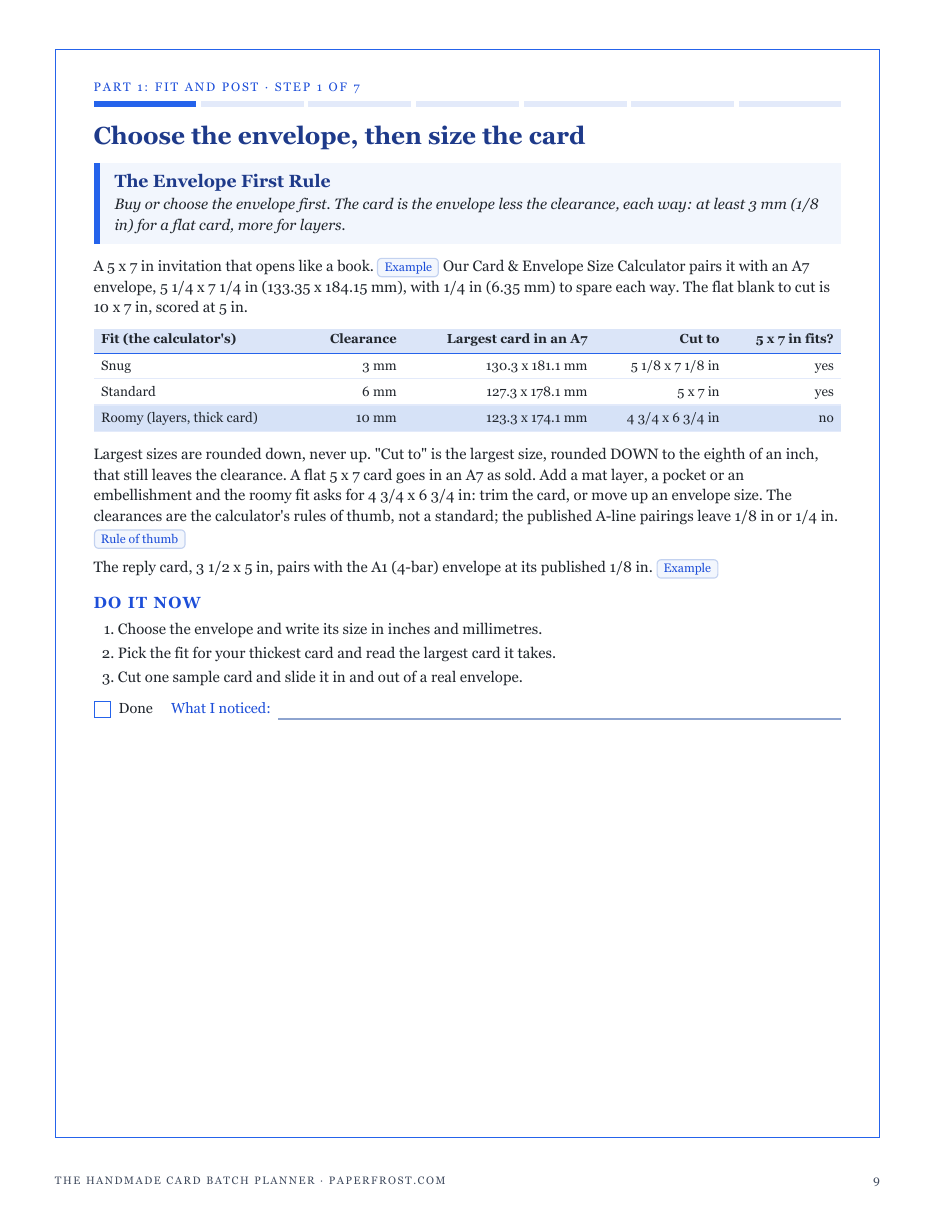
- The Envelope First Rule: choose the envelope, then size the card to it with the clearance its layers need
- The Rectangle Rule: the USPS letter size and 1.3 to 2.5 shape rule, and what a square envelope costs (dated)
- The One Ounce Rule: the sealed piece weighed from your cardstock's gsm before you buy stamps
- The Grain Rule: card blanks counted per sheet with the grain, not just the most that fit
- The Households Rule: addresses, spares, spoilage, then whole packs of paper and envelopes
- The Rule of Four: program pages counted in fours, with the blanks planned and the sheets for every copy
- The Sharp Blade Rule: safe cutting with craft knives and guillotines, and sessions booked back from the mailing week
- Working pages: a mail check sheet, a cut plan and a session tracker
- Bonus: an envelope reference for A-line, #10, C6, DL, C5 and square envelopes, with the post's rules
- Personalised sheet: your card, cut, booklet or cardstock worked from your own figures
Run one of the free calculators first and buy from that page, and this sheet is computed from your own figures. Buy from here and the pack still arrives complete — the sheet simply has no numbers of yours to work from yet.
14-day refund, no questions asked. If the pack is not what you needed, email support@graburl.com and we refund you in full — you do not have to justify it or delete the file. Full policy.
$19.00 including any taxes · PDF, 23 pages · instant download, link valid 7 days and 5 downloads.
Sold by GrabURL. The charge appears on your statement as GrabURL.
Refund policy · Terms of sale · support@graburl.com